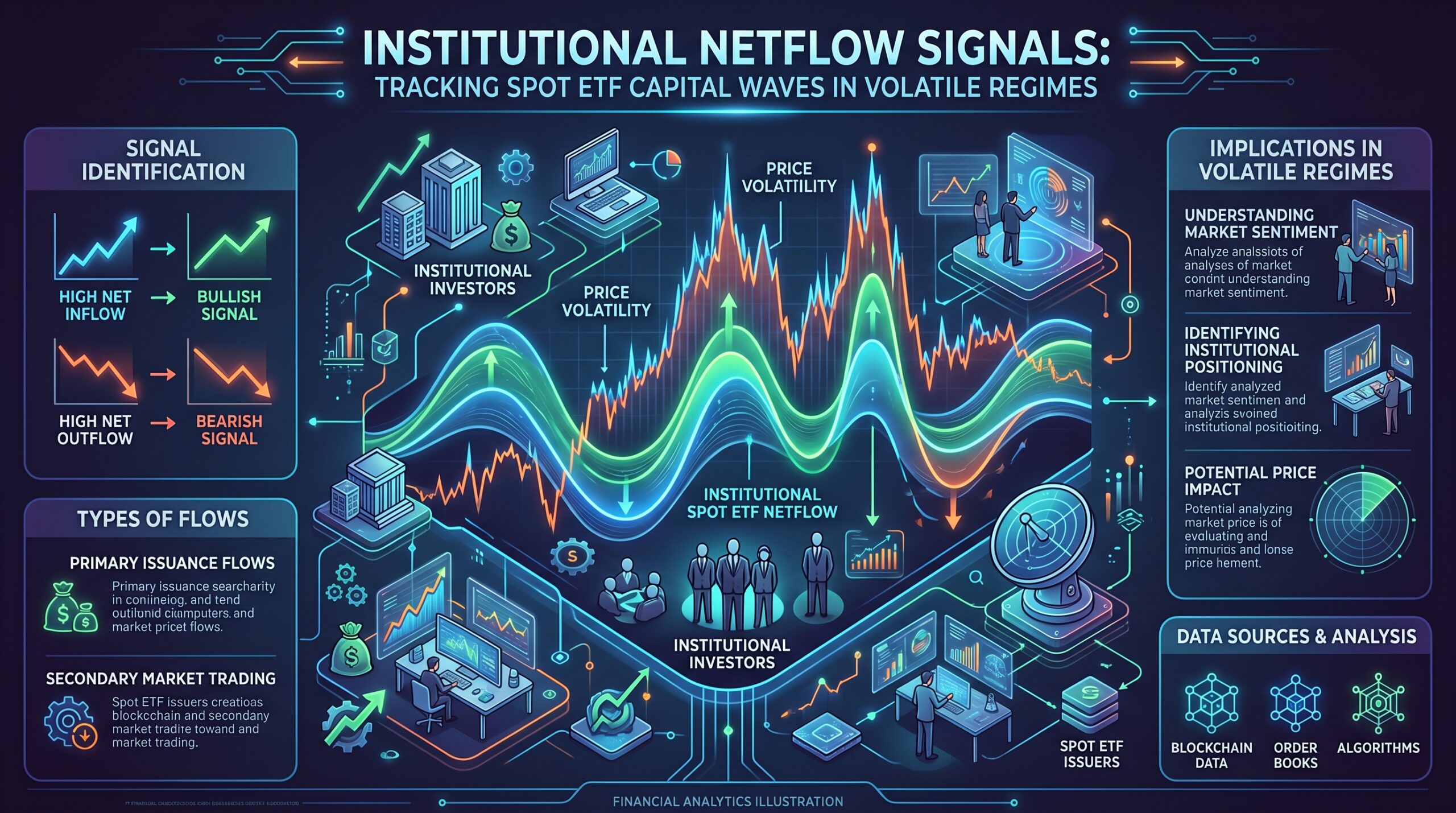
You have likely watched your crypto positions whipsaw during a high-volatility session, wondering if the sell-off is a fundamental shift or just a temporary liquidity flush. We have all been there. Most traders spend their time analyzing social media sentiment or technical candle patterns, yet they ignore the single most powerful source of data: the institutional footprint. Spot ETFs act as a massive, transparent pipeline for institutional capital, and the daily netflow data is the most reliable “leading indicator” we have for price discovery.
If you aren’t tracking how the “Big Money” is moving into or out of these regulated vehicles, you are essentially trading blindfolded. Institutional capital doesn’t move on rumors; it moves on mandates, portfolio rebalancing, and macro-hedging. By decoding the daily netflow signals from ETFs like IBIT, FBTC, and ETHE, you gain a front-row seat to where the smart money is positioning before the next major price wave.
The Mechanics of Institutional Flow
Spot ETFs are unique because their creation and redemption mechanisms require the issuer to actually buy or sell the underlying asset on the open market. This is not a “paper” derivative; it is a direct claim on the asset. When you see a “net inflow” signal, it means the ETF issuer has been forced to accumulate more Bitcoin or Ethereum to meet institutional demand.
Expert Insight: Stop looking at the nominal dollar value in isolation. Instead, compare the netflows to the total daily volume of the asset. A $500 million inflow on a low-liquidity day has a massive, immediate impact on price, whereas the same amount during a period of high market turnover might be absorbed effortlessly. I personally track “Flow Velocity”—the rate at which capital enters relative to the average daily volume—to gauge if the market is nearing a local supply shock.
Why ETFs Amplify Volatility
While institutions bring stability to the market over the long term, their collective behavior can trigger intense volatility in the short term. Because these flows are often driven by algorithm-based rebalancing or macro-economic triggers, they tend to move in clusters. When capital flight begins, it often triggers a “cascading effect” where multiple institutional players pull liquidity simultaneously.
Personal Example: I remember the stretch in May 2026 when we saw thirteen consecutive days of net outflows. It wasn’t just retail panic; it was a systemic shift. When you see a consistent, multi-day streak of negative flows, the “stabilization” narrative falls apart. At that point, the ETF data isn’t just suggesting a trend—it’s confirming a regime change.
Decoding the Signal: The 5-Day Smoothing Rule
Raw daily data is incredibly noisy. One day of outflows could be an anomaly, or it could be a hedging move by a single major fund. To filter out the “micro-noise,” I rely on a 5-day moving average of netflows. This allows you to see the true capital wave rather than the daily splash.
-
Positive Trend: If the 5-day netflow average is climbing, the “Institutional Bid” is active. This is your green light for bullish trend-following strategies.
-
The Inversion Point: Watch for the moment the cumulative monthly flow turns negative. This is a classic “regime shift” signal that often precedes a 10–15% pullback in the underlying asset.
-
Divergence: If price is making new highs but netflows are stagnant or declining, beware. This “flow-price divergence” is one of the most reliable indicators of a market top.
Integrating Flow Data into Your Risk Management
You should never use flow data as a standalone “buy/sell” signal. Instead, use it to calibrate your risk. When institutional netflows are aggressively positive, you can afford to hold positions through short-term dips. When the flows turn neutral or negative, it is time to tighten your stops and reduce leverage.
Expert Insight: Many traders ignore the “Cost Basis” of the ETF issuers. If you track the average entry price of institutional inflows, you can identify “support zones” where these institutions are likely to defend their positions. If price falls toward their average entry, the probability of a “buy-the-dip” wave from the institutions increases significantly.
The era of guessing what “the institutions” are doing is over. With transparent daily reporting, you now have the tools to track the capital waves that dictate the market’s medium-term direction. By analyzing smoothed netflow signals and identifying divergence from price action, you can trade with the tide instead of fighting against it. Start integrating ETF flow data into your morning routine today, and watch how much clearer the market landscape becomes.
FAQ
Where can I find reliable, real-time spot ETF flow data?
Tools like Glassnode, TradingView, or dedicated trackers (like those found on the App Store or Google Play) provide aggregated daily data for all major spot issuers.
Does a single day of massive outflows mean a crash?
Not necessarily. Look for a streak or a trend. A single day of outflows could be a portfolio rebalance. Five days of consistent outflows is a macro signal of institutional selling.
Do these flows affect the price immediately?
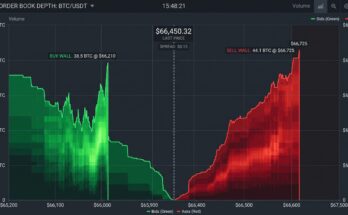
Often, yes. Because APs (Authorized Participants) must execute trades to keep the ETF price aligned with NAV, the buying/selling happens as soon as the demand is processed. You can often see the “ETF effect” in the order books during U.S. trading hours.
Is it better to track Bitcoin or Ethereum ETF flows?
Both are valuable, but Bitcoin ETF flows generally have a higher impact on overall crypto market liquidity because they have a larger total AUM and act as the “beta” for the entire sector.