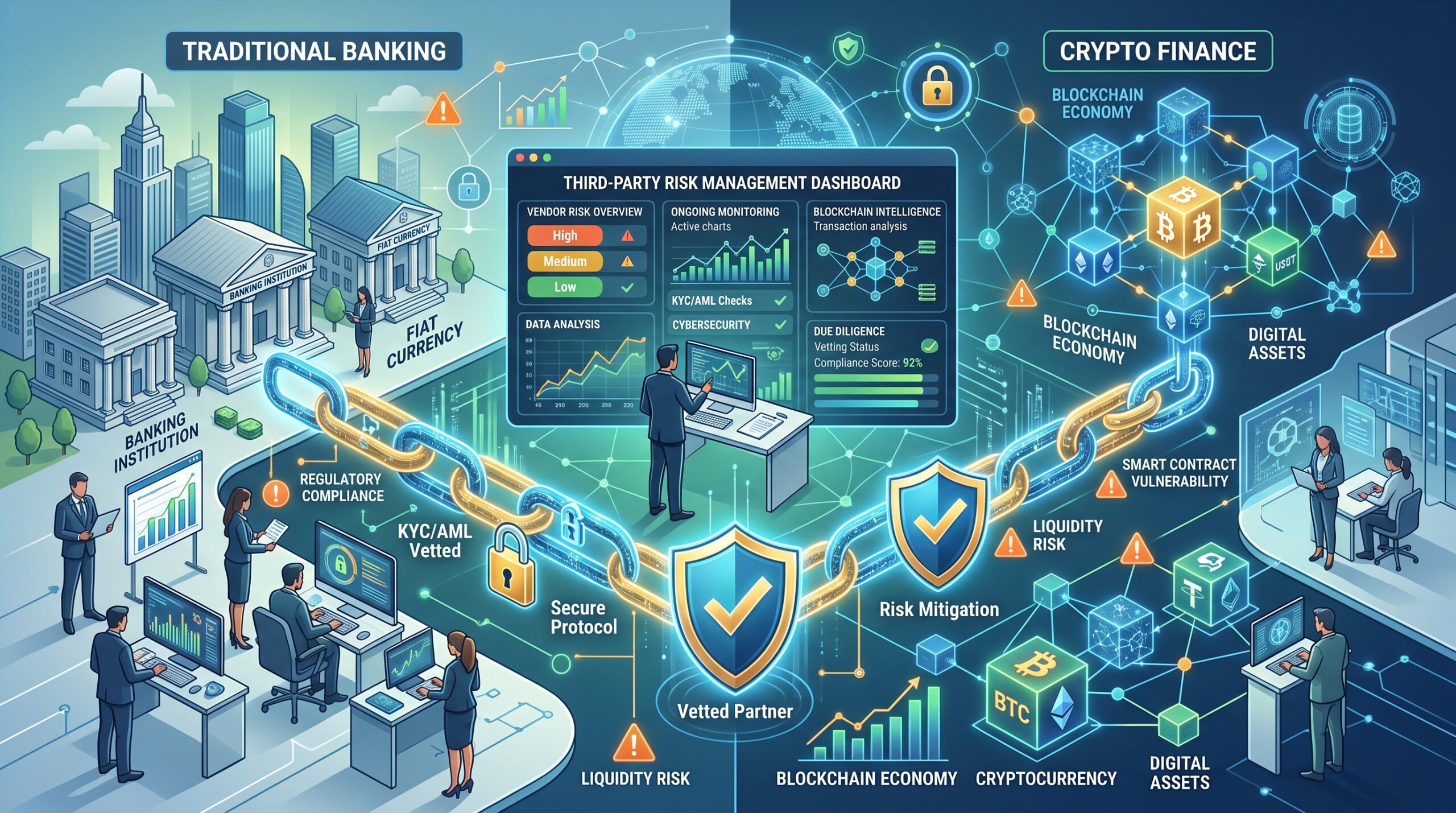
Traditional financial institutions rush to embrace cryptocurrency opportunities while often overlooking the hidden dangers lurking in their vendor relationships. One weak link in the chain of third-party providers can expose billions in assets to sophisticated attacks or operational failures.
Effective third-party risk management has become non-negotiable for organizations navigating the complex crypto landscape. The intersection of traditional finance and decentralized technologies creates unique challenges that demand fresh approaches. Getting this right separates institutions that thrive from those that face costly regulatory scrutiny or devastating breaches.
Why Third-Party Risks Multiply in Crypto Environments
Crypto operations rely heavily on specialized vendors for custody solutions, trading infrastructure, and compliance tools. Each connection point introduces potential vulnerabilities that traditional risk frameworks often fail to address adequately.
Smart contract dependencies, oracle networks, and cross-chain bridges add layers of complexity that many risk teams are still learning to evaluate properly. The pseudonymous nature of many crypto counterparties makes due diligence particularly challenging compared to established banking partners.
A single compromised vendor recently caused significant headaches for several mid-sized institutions experimenting with crypto offerings. The incident highlighted how quickly problems can cascade through interconnected systems.
Key Components of Effective Third-Party Risk Management
Start with comprehensive vendor inventories that map all crypto-related relationships and data flows. Regular security assessments should evaluate not just technical controls but also the vendor’s incident response capabilities and regulatory compliance posture.
Implement continuous monitoring rather than point-in-time reviews. Automated tools can track changes in vendor security ratings, regulatory status, and on-chain activities that might signal potential issues.
Contract language needs specific provisions addressing crypto-specific risks including key management responsibilities, business continuity requirements, and clear liability allocation for smart contract failures.
Best Practices for Crypto-Ready Organizations
Develop tiered risk assessment frameworks that apply stricter scrutiny to critical vendors handling custody or settlement functions. Cross-functional teams combining traditional risk managers with crypto-native experts often produce the most effective oversight.
Regular tabletop exercises simulating vendor breaches or service disruptions help identify gaps before real incidents occur. Consider requiring key vendors to maintain SOC 2 reports specifically addressing digital asset controls.
Many successful institutions now maintain dedicated crypto risk committees that meet regularly to review third-party exposures as market conditions and regulatory requirements evolve.
Building Resilience for the Future

The financial sector’s crypto journey requires evolving risk management practices that match the speed and innovation of decentralized technologies. Organizations that treat third-party risk management as a strategic advantage rather than a compliance burden will navigate this transition more successfully.
Technology solutions including blockchain analytics and automated compliance monitoring are making sophisticated oversight more achievable even for smaller institutions. Collaboration across the industry through information sharing initiatives can help everyone raise their standards.
The institutions that master third-party risk management in crypto will be best positioned to capture opportunities while protecting their customers and reputations.
FAQ
What makes third-party risk management different in crypto compared to traditional finance?
Crypto introduces unique elements like smart contract dependencies, decentralized protocols, and rapidly evolving technical standards that require specialized evaluation approaches.
How often should financial institutions review their crypto vendors?
Critical vendors warrant continuous monitoring with formal reassessments at least quarterly or after significant market or regulatory changes.
Can smaller financial institutions manage these risks effectively?
Yes, by leveraging standardized assessment frameworks, third-party rating services, and focusing resources on the highest-risk relationships first.
What role does regulation play in third-party crypto risk management?
Emerging rules increasingly require specific due diligence and ongoing monitoring for digital asset service providers.
Should companies avoid third-party providers when entering crypto markets?
Not necessarily. Strategic partnerships often provide necessary expertise, but they must be accompanied by robust oversight and clear contractual protections.
Strengthen Your Third-Party Risk Management Today
The crypto-ready financial sector demands sophisticated approaches to managing vendor relationships and associated risks. Organizations that invest in strong third-party risk management now will build lasting competitive advantages.
Review your current vendor assessment processes this quarter and identify areas where crypto-specific considerations need stronger integration. The institutions that get this right will lead the industry through its next phase of innovation and growth. Start building more resilient partnerships today.