The global financial landscape has fundamentally shifted toward a highly monetized forecasting ecosystem. The explosion of interest in crowdsourced intelligence has turned simple speculation into a massive multi-billion-dollar industry. If you think prediction markets are merely a playground for casual sports bettors or niche political enthusiasts, you are looking at what is truly just the tip of the iceberg.
For the modern trader, navigating these platforms can feel incredibly overwhelming due to the stark variations in asset classes, regulatory structures, and fee profiles. You might worry about risking real capital on an unregulated platform or find yourself frustrated by the limitations of restricted domestic alternatives. Finding the absolute best venue depends entirely on what you are optimizing for—whether that is institutional-grade regulatory safety or the deepest global liquidity pools. Let’s break down exactly how the top five prediction markets compare against each other.
Polymarket: The King of Global Liquidity
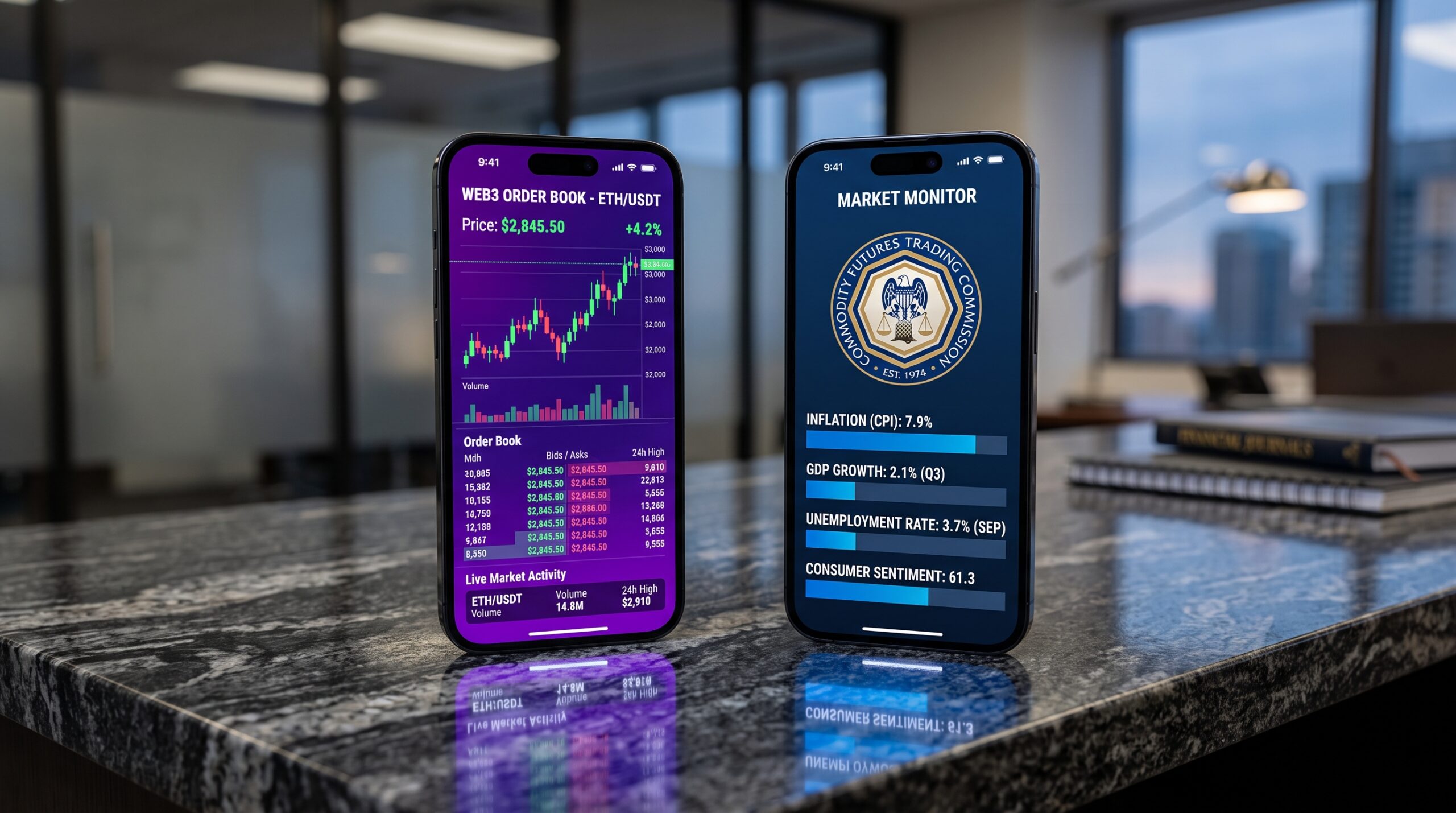
When evaluating sheer trading volume and cultural relevance, Polymarket remains the undisputed giant of the decentralized world. Operating as a Web3-native application on the Polygon blockchain, it handles billions of dollars in volume from international users. The platform runs entirely on a central limit order book (CLOB) model using the stablecoin USDC, allowing for friction-free, instantaneous global settlements.
The massive scale of Polymarket means that its major political, macroeconomic, and pop-culture markets carry immense depth, often serving as a real-time sentiment benchmark for mainstream media outlets. However, because it is an unregulated offshore entity, its core interface blocks direct U.S. IP addresses, meaning American users are structurally limited unless they navigate domestic alternatives. Additionally, the decentralized oracle framework can occasionally lead to intense resolution disputes during ambiguous event outcomes.
Kalshi: The Regulated Wall Street Heavyweight
If your primary objective is absolute legal compliance and institutional safety, Kalshi stands out as the premier choice. Regulated directly by the Commodity Futures Trading Commission (CFTC) as a Designated Contract Market (DCM), Kalshi operates inside the formal U.S. financial architecture. Users deposit fiat currency securely via standard bank routing ($ACH$) or direct wires, entirely bypassing the need for digital wallets or crypto mechanics.
| Prediction Venue | Core Asset Type | Regulatory Status | Primary Fee Structure |
| Polymarket | Crypto (USDC) | Unregulated International / Limited US DCM | Category-based taker fees (0.75% to 1.80%) |
| Kalshi | Fiat (USD) | Fully CFTC-Regulated DCM | Probability-weighted taker fee (peaking at 1.75%) |
| Manifold Markets | Play Money (Mana) | Unregulated Social Platform | Zero real-money fees; optional sweepstakes |
| PredictIt | Fiat (USD) | Restricted No-Action Framework | Heavy 10% profit tax + 5% withdrawal fee |
| Metaculus | Pure Reputation points | Non-commercial Research Hub | No financial fees; purely point-driven |
Kalshi’s growth has been massive, fueled by major legal victories expanding its right to host election and sports contracts. The platform utilizes a probability-weighted fee formula that penalizes high-uncertainty trades while keeping highly probable positions remarkably cheap. The trade-off is geographic and administrative: it requires a strict Social Security Number ($SSN$) verification, completely closing it off to the broader international public.
Manifold Markets: The Frontier of Play-Money Forecasting
Manifold Markets approaches the prediction economy from a radically different angle by removing real financial risk from the core equation. The platform operates primarily on a proprietary play-money currency known as “Mana,” allowing anyone to create a custom market on absolutely any topic imaginable within seconds. This frictionless layout makes it an incredibly popular hub for tech insider circles, speculative subcultures, and experimental AI agent forecasting.
While the play-money model means you cannot lose your hard-earned net worth, it also means your upside is limited to leaderboard prestige or optional prize shop redemptions. The lack of financial downside can occasionally lead to erratic price manipulation and lower crowd accuracy compared to the heavily funded order books found on multi-million-dollar real-money platforms.
PredictIt and Metaculus: The Pioneers of Niche Data
Completing the top five landscape requires looking at the specialized veterans of the sector. PredictIt has long served as the academic grandfather of political betting, operating under a narrow regulatory allowance. However, its restrictive $850 position limits and steep fee structure—taking a massive 10% cut of profits alongside a 5% withdrawal fee—make it highly inefficient for active capital management.
Metaculus, on the other hand, operates as a pure, reputation-based forecasting community focused on long-term scientific, geopolitical, and artificial intelligence milestones. It features zero financial wagering; instead, it relies on complex scoring algorithms to rank the track records of human and machine forecasters, serving as a powerful data stream for global research institutions.
Choosing Where to Deploy Your Capital

The prediction economy is undergoing an aggressive evolution as a 2026 Wall Street price bombshell is suddenly hurtling toward Bitcoin and crypto regulatory landscapes. Trading on real-world outcomes is no longer a fringe hobby; it is rapidly transforming into an established asset class that rivals traditional options markets.
Stop treating all platforms the same and begin aligning your choice with your operational footprint. If you are a U.S. citizen seeking a secure, bank-linked gateway with institutional backing, create your verified account on Kalshi today. If you are an international user comfortable with Web3 architecture looking for the absolute deepest liquidity available globally, set up your self-custodial wallet and explore the expansive order books of Polymarket.
FAQ
How do prediction market contracts calculate their payout values?
Prediction markets rely on binary contracts valued strictly between $0.00 and $1.00. The current trading price directly represents the crowd’s estimated percentage chance of the event occurring. When the event resolves, winning contracts automatically clear at exactly $1.00, while losing contracts drop to zero.
Are my profits on regulated prediction platforms subject to income tax?
Yes, any financial gains generated on federally regulated venues like Kalshi or PredictIt are classified as taxable income and are reported directly to the IRS. Users receive standard tax documentation at the end of the fiscal year detailing their net capital gains.
Can automated AI trading agents participate in these prediction books?
Absolutely. Both Polymarket and Kalshi provide robust public developer APIs that are actively dominated by quantitative hedge funds and automated AI scraping scripts. These algorithms continuously monitor global news feeds to instantly execute trades ahead of human retail participants.