You have likely spent hours researching the best hardware wallets, only to realize that the most critical security step happens after the device is set up. We have all been there. You hold your 24-word seed phrase in your hand, feeling the immense weight of the assets it controls, and then you face the inevitable question: where do I put this so it survives the next fifty years? Most people default to a scrap of paper, but in the world of long-term wealth preservation, that is a recipe for disaster.
If your goal is to protect your digital inheritance, you must move beyond temporary solutions. Professional crypto holders don’t just “hide” their keys; they engineer physical redundancies that can survive fires, floods, and the slow creep of time. Let’s explore the physical medium protocols that ensure your seed phrase remains accessible to you—and only you—for as long as you need.
Why Paper Fails as a Long-Term Protocol
Paper is the default for a reason: it’s convenient, free, and immediate. However, paper is structurally incapable of serving as a permanent record. It is highly susceptible to environmental degradation, including moisture, mold, and atmospheric acidity that yellows and weakens the fibers over decades. More catastrophically, it is entirely defenseless against residential fires, which frequently reach temperatures far exceeding the auto-ignition point of cellulose.
Expert Insight: I treat paper as a “transport medium” only. It is perfectly fine for the moment you initialize your wallet, but it should never be your final storage state for significant holdings. If you must use paper for a temporary backup, laminate it or store it in a vacuum-sealed, fire-retardant pouch within a bolted-down safe. But consider this a stopgap, not a solution.
The Gold Standard: Metal Backup Mediums
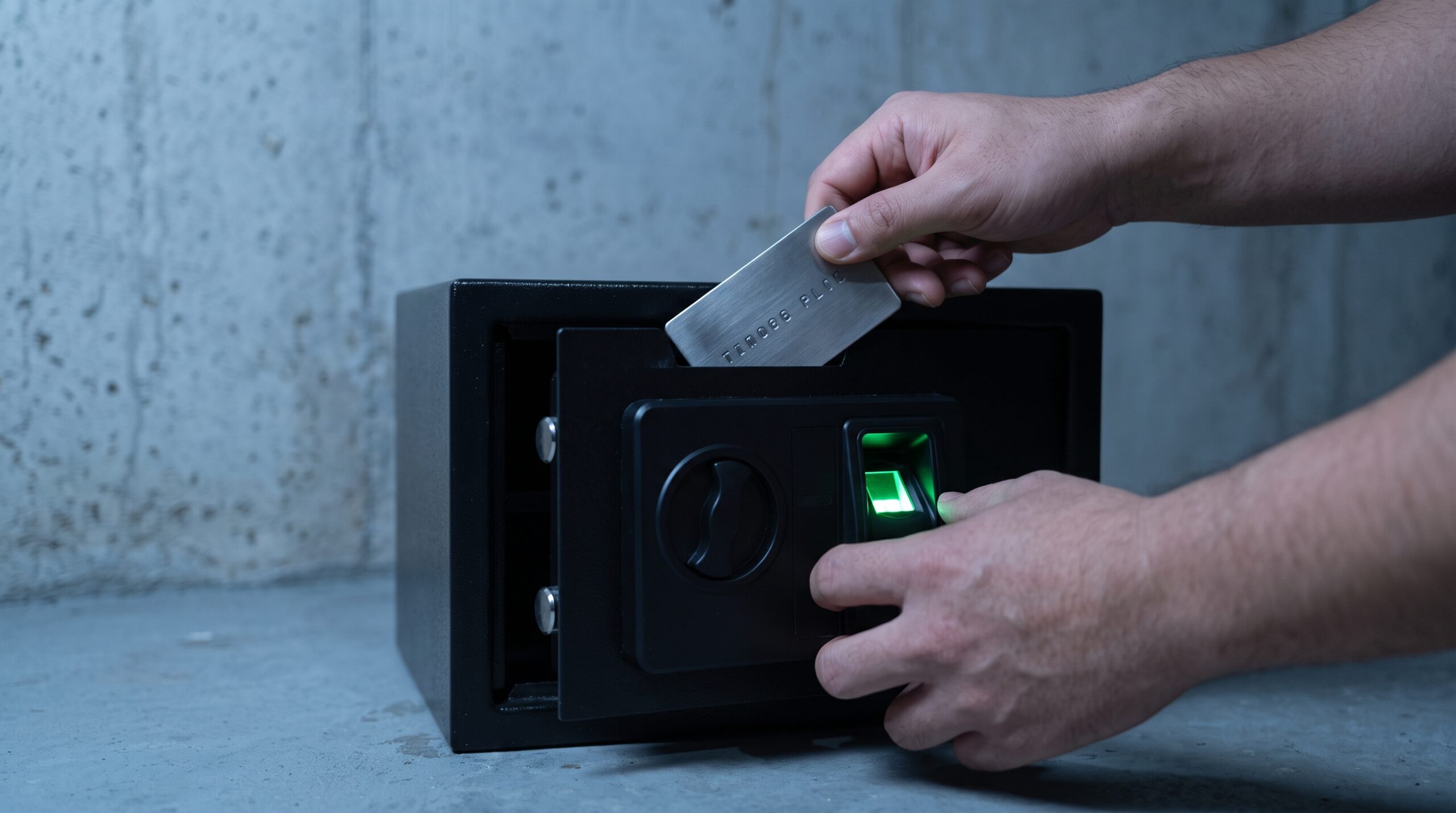
If you are serious about security, you need to transition to metal. Stainless steel or titanium plates are the industry standard for a reason: they are essentially indestructible in a standard household environment. These plates are engineered to withstand extreme heat, heavy flooding, and significant mechanical impact, ensuring your mnemonic remains legible long after a fire or disaster has leveled the structure around it.
Personal Example: I remember upgrading my own security setup to a stainless steel punch-plate system. It took thirty minutes of careful, deliberate work to stamp each letter, which felt tedious at the time. However, knowing that my backup could survive a house fire with no loss of data provided a level of psychological peace that no amount of digital encryption could match. It’s an investment in your own “survival bias.”
Protocol Architecture: Geography and Redundancy
Never rely on a single physical copy, regardless of how “indestructible” the medium is. A single backup is a single point of failure. The best physical protocol is the 2-of-2 Geographic Split. This means creating two complete, metal-backed copies of your seed phrase and storing them in two distinct, physically separate locations.
Expert Insight: Your primary copy stays in your home, ideally in a fireproof, hidden safe. Your secondary copy should be stored off-site—perhaps in a trusted family member’s safe, a high-security bank vault, or a secondary property you own. This setup protects you from the nightmare scenario of losing both your house and your backup in the same unfortunate event.
Security Against Prying Eyes
Physical security is just as much about stealth as it is about strength. A heavy, fireproof safe is a giant “steal me” sign to a burglar. Your physical storage needs to be inconspicuous. Avoid storing your metal backups in obvious places like home offices or bedside tables.
-
Camouflage: Use hidden compartments or non-obvious containers.
-
The “Breadcrumb” Method: If you feel the need to split your phrase, use only cryptographically sound methods like Shamir’s Secret Sharing (SSS). Never just cut a list of words in half and leave them in two drawers—that is not security; that is just making it easier for someone to find half your key.
-
Testing: Always, without fail, verify your backup. Restore your wallet from your metal copy before you send significant funds to the address. If you made a mistake stamping a letter, you want to know now, not in five years when you desperately need those funds.
Your seed phrase is the master key to your digital legacy, and it deserves more than a corner of your desk or a notebook in a closet. By moving from fragile paper to robust, fire-resistant metal and implementing a geographic redundancy strategy, you transform your security posture from “hopeful” to “institutional.” Treat your storage protocol with the same level of care you use to analyze your trades. Take the time to engrave your backup today; your future self will thank you for the foresight.
FAQ
Can I engrave the words myself?
Absolutely. Many people buy a pack of high-grade stainless steel washers and a center punch to DIY their own backup. It’s cost-effective and highly reliable, provided you double-check your letter alignment.
Is a safety deposit box really secure?
It is excellent for physical protection, but remember that banks have limited access hours and can be subject to government orders or institutional issues. It’s a great secondary location, but maybe not the only one.
Should I include the passphrase in the backup?
The “seed” and the “passphrase” are different layers. Many experts recommend backing up the seed on metal and keeping the passphrase—if you have one—either memorized (with a backup in a completely different, third location) or hidden separately. Never engrave them on the same plate.
What happens if I forget the order of the words?
The BIP-39 standard requires the words to be in the exact order provided. If you have the words but don’t know the order, you effectively have no backup. Always double-check your sequence before finishing your metal backup.