
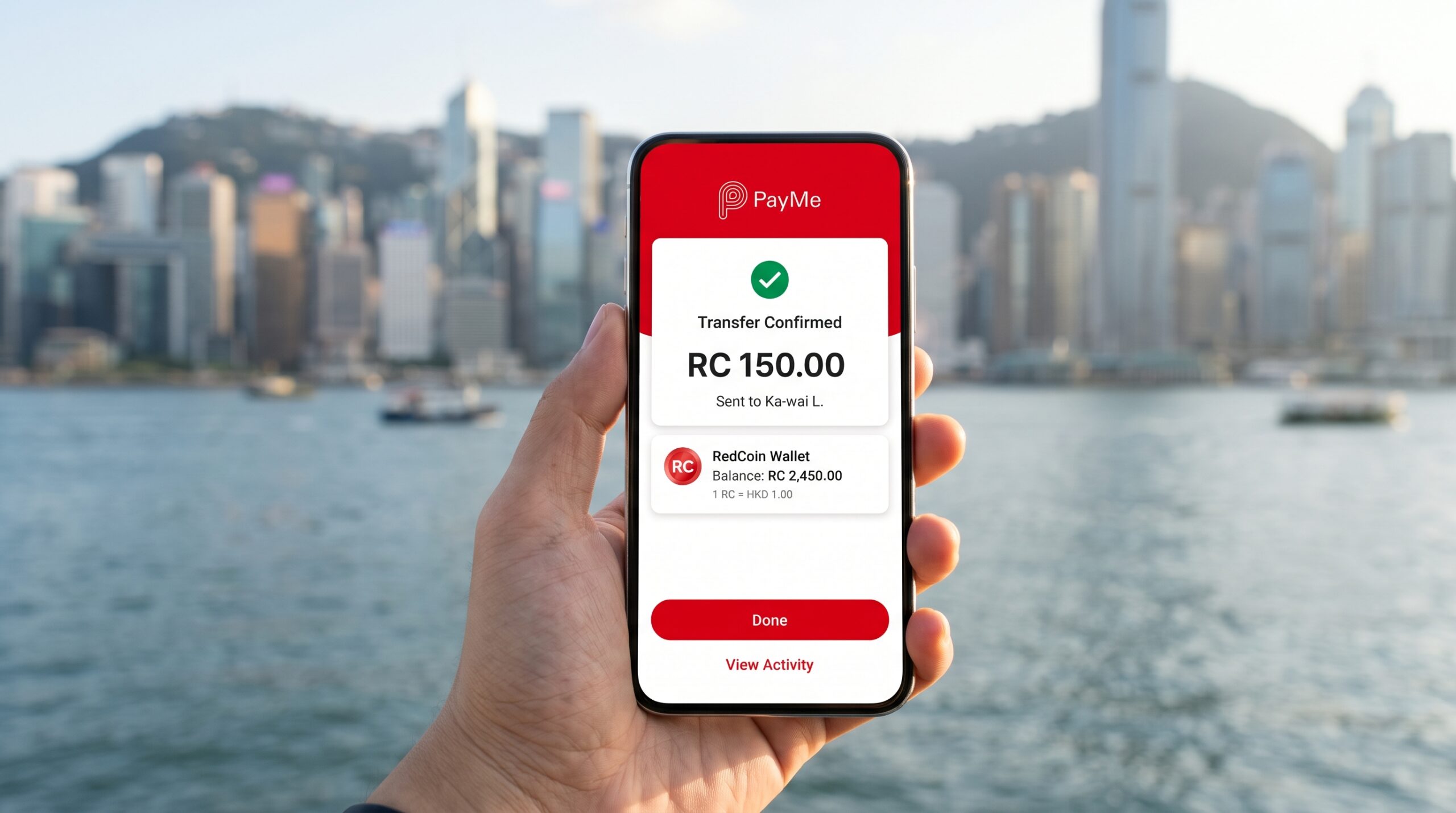
You use a payments app every day and rarely think about the rails underneath it. HSBC has just changed that equation for more than three million PayMe users in Hong Kong. On 23 October 2026 the bank began rolling out HSBC RedCoin (ticker RCHKD), its first Hong Kong-dollar stablecoin, directly inside the PayMe app. The token is HKD-denominated, licensed by the Hong Kong Monetary Authority, and designed for everyday peer-to-peer and merchant payments before expanding into tokenised investments later.
What RedCoin Is and How It Works
RedCoin is a fiat-referenced stablecoin issued by HSBC and backed under the regulatory framework that Hong Kong introduced for stablecoin issuers. It runs on a permissioned blockchain, with private keys held by the bank and transfers limited to authorised channels. Users do not manage seed phrases or external wallets in the initial phase. Activation happens inside PayMe: update the app, open a stablecoin wallet, and the interface looks and feels close to the familiar PayMe experience. There is no minimum balance and no separate account-opening process for existing PayMe customers.
First Uses: Payments, Not Speculation
In the opening phase RedCoin supports two core functions. You can send it instantly to other PayMe users and pay at the large network of merchants already accepting PayMe. The priority, according to the bank, is stable service and user trust rather than maximum features on day one. Staff pilots involving nearly one hundred users tested minting, wallet activation and live transfers before the public rollout. Launch promotions include limited transaction discounts and RewardCash incentives to encourage early trials.
Regulatory Backing and Custody
Hong Kong’s Stablecoins Ordinance created a licensing regime for fiat-referenced stablecoins. HSBC received one of the early licences. Custody of RedCoin is handled through HSBC Digital Assets Custody, keeping the asset inside the bank’s controlled environment. Redemption is available through HSBC’s permitted channels, subject to the terms that govern reserve liquidity and operational capacity. The design deliberately prioritises regulatory compliance and institutional-grade safeguards over open, permissionless circulation.
Planned Expansion Beyond Payments
Later in 2026 HSBC intends to add RedCoin wallet functionality to the main HSBC Hong Kong Mobile Banking App. The bank also plans to let customers use RedCoin to subscribe to tokenised investment products, including a share class of an HKD money-market fund, with further tokenised assets such as gold and third-party funds expected to follow. The sequence is deliberate: first embed the stablecoin in everyday payments, then connect it to simple on-platform investments once the user base is comfortable.
Why a Bank-Issued Stablecoin Matters
Most retail users still treat crypto and traditional banking as separate worlds. A regulated HKD stablecoin issued by one of Hong Kong’s major note-issuing banks and delivered through an app already used by millions lowers that barrier. Hypothetical illustration: a PayMe user who previously transferred only fiat can now move RedCoin to a friend in seconds, pay a merchant, and later allocate a small amount into a tokenised money-market product without leaving the HSBC ecosystem. The experience feels closer to an upgraded payment rail than to a speculative crypto product.
Limitations and Practical Considerations
RedCoin is currently confined to HSBC’s permitted channels. It is not designed for unrestricted transfer to external self-custody wallets or public blockchains in the initial phase. Availability is being rolled out in stages, so not every PayMe user may see the wallet on the first day. As with any new digital asset, users should review the terms on redemption, fees, and operational limits. The value of the token is intended to track the Hong Kong dollar, but the practical ability to redeem at scale depends on the bank’s reserve and operational arrangements under stressed conditions.
HSBC RedCoin brings a regulated, HKD-backed stablecoin directly to more than three million PayMe users in Hong Kong. The first phase focuses on simple peer-to-peer transfers and merchant payments inside a familiar app, with plans to extend the wallet to the main banking app and to enable subscriptions to tokenised investments later in the year. For users already comfortable with PayMe, activation is designed to be low-friction. If you are a PayMe customer in Hong Kong, check for the wallet option after the next app update and review the official terms before moving meaningful amounts. The launch marks a concrete step in Hong Kong’s effort to integrate regulated digital assets into everyday retail finance.
FAQ
What is HSBC RedCoin?
A Hong Kong-dollar-denominated stablecoin issued by HSBC, licensed by the HKMA, and initially available inside the PayMe app under the ticker RCHKD.
Who can use it right now?
PayMe users in Hong Kong are receiving the wallet in a phased rollout that began on 23 October 2026. More than 3.3 million users are in scope.
What can I do with RedCoin at launch?
Send it to other PayMe users and pay merchants that accept PayMe. Investment use cases are planned for later.
Is it available outside HSBC apps?
In the initial phase transfers and holdings are restricted to HSBC’s permitted channels. It is not designed for open, permissionless use.
Will RedCoin appear in the main HSBC banking app?
Yes. HSBC plans to add wallet functionality to the HSBC HK Mobile Banking App later in 2026, along with the ability to subscribe to certain tokenised investment products.